Designing for Biodiversity at Strijp-S
How iteration and collaboration improved our nature-inclusive furniture
At Utemaru, we believe that better public spaces are not created in a single step. They are the result of testing, learning, and continuously improving.
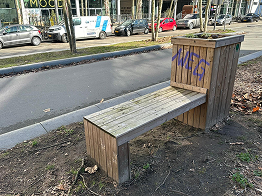
In Strijp-S in Eindhoven, we debuted our nature-inclusive outdoor furniture, developed together with a group of dedicated partners. The goal was clear: create a public-focused piece that not only offers seating, but also actively contributes to urban biodiversity.
A Circular Starting Point
The first version of the planter system was built using reused coffee bags. This approach allowed us to experiment with a circular material that could support plant life while enabling natural water drainage.
It was an intentional choice, one that aligned with our ambition to explore how waste materials can be reimagined in public space design.
Working closely with Ergon, who aided in the construction and assembly, and Vebego, who provided biodiversity expertise, we created a functional prototype ready to be tested in a real-world environment.
Learning from Real-World Conditions
Public space projects are always exposed to the elements, and that’s exactly where meaningful insights emerge.
By observing how the planter performed in conditions ranging from 35ºC to heavy snowfall, we identified opportunities to improve the system. Rather than seeing this as short coming, we approached it as a natural part of the design process: learning by building.
Upgrading the System
At the same time, we took the opportunity to further strengthen the ecological value of the installation:
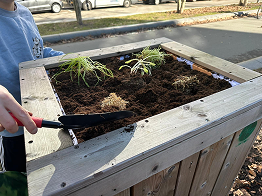
The vegetation was replanted and optimized to better support biodiversity
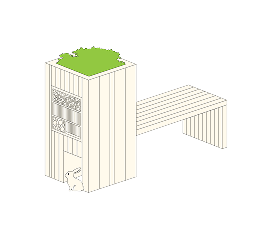
An insect hotel, developed by DeMaackers, was integrated into the design
The seating elements, using wood provided by Barli, continued to offer a functional and welcoming public space
This phase transformed the installation from a strong concept into a more resilient and refined solution.
Collaboration as the Foundation
Projects like this are only possible through collaboration. Each partner brought essential knowledge and resources that helped shape the final result.
We would like to acknowledge the contributions of:
Gemeente Eindhoven – Client and host of the project
Ergon – Aid in construction and assembly
Vebego – Biodiversity advice
Eindhoven 247 – Reused plant pot material supplier
Barli – Wood for the seating elements supplier
DeMaackers – Insect hotel integration
Together, we created a project that demonstrates how design, ecology, and circularity can come together in the public realm.
Building Better Public Spaces
The Strijp-S project shows that innovation in public space is not about getting everything right from the start. It’s about being willing to test ideas, adapt to real-world conditions, and improve over time.
By combining circular materials, biodiversity-focused design, and strong partnerships, we are taking steps toward more sustainable and nature-inclusive cities.
At Utemaru, we will continue to explore how public furniture can do more, supporting not just people, but the ecosystems around them.